What Each of the Four Pillars Actually Represents
Year, month, day, hour — what each position governs, why they carry different weight, and how the traditional family meanings fit in.
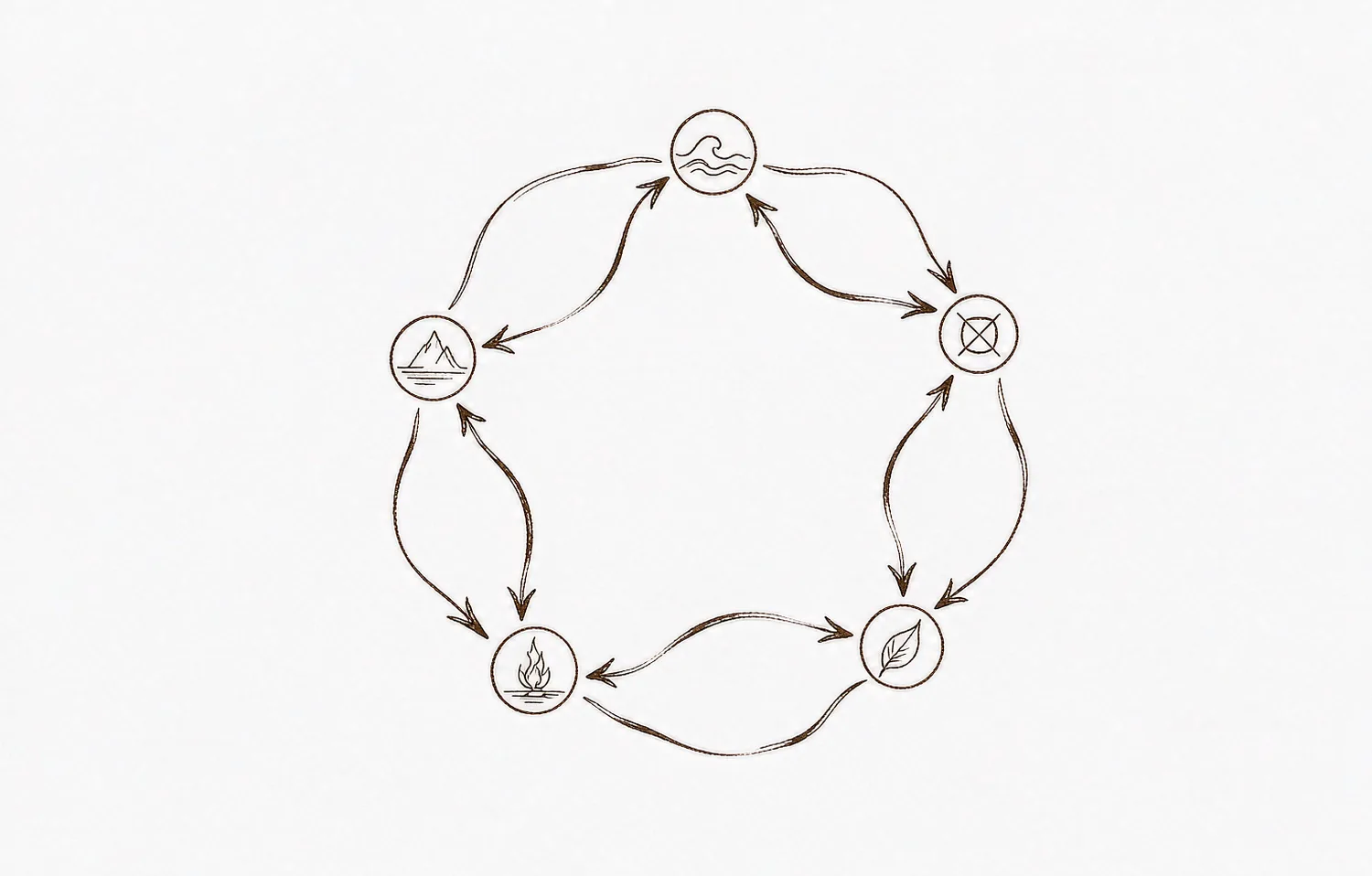
A BaZi chart is four vertical pairs: year, month, day, hour. Each pair is one heavenly stem stacked on one earthly branch, which is where the name Four Pillars comes from. The four positions are not interchangeable — they carry different weight and they govern different parts of a life.
Knowing what each pillar is for is most of what separates a reading from a list of symbols, so it is worth being precise about it.
The year pillar — context
The year pillar records the stem and branch of the birth year. Traditionally it represents ancestry, family background and the conditions a person was born into — the hand they were dealt rather than the hand they play.
It is the weakest of the four positions in terms of direct influence on the self, and in modern practice it is read mainly as context: the environment, the family expectations, the era. Comparing the year branch to the current year's branch is what produces the Tai Sui readings that dominate popular zodiac content.
The month pillar — the strongest position
The month pillar is the season, and in Chinese metaphysics season is the single largest determinant of an element's strength. This is why the month branch is treated as the most powerful position in the chart, ahead of the day itself in terms of raw influence.
It governs parents and upbringing in the traditional family scheme, and in practical readings it covers career, social position and the shape of working life. When a practitioner says 'your Wood is strong', the month pillar is usually the reason.
The day pillar — you and your partner
The day stem is the day master: the character that represents the person, and the reference point for every other reading in the chart. This is the only pillar that is interpreted entirely as the self rather than as a relationship to the self.
The day branch is the spouse palace. What sits there is read as the kind of partner a person is drawn to and the character of the marriage or primary relationship. It is technically the second most consulted position after the month branch, which is why compatibility questions so often come down to the day branch.
The hour pillar — later life and output
The hour pillar covers children, late life and the private or unobserved self. It is the position most dependent on an accurate birth time, and the one most often missing from a chart because people do not know when they were born.
In practical readings the hour pillar is also read as output and legacy: what the person produces and what remains of it. Two charts identical in the first three pillars and different in the hour are usually read as the same person with a different second half.
How the four are weighted
The conventional weighting, from strongest to weakest, is month, day, hour, year — although practitioners vary on the middle two. What is not in dispute is that the month branch governs strength and the day stem governs identity.
The weighting also explains a common frustration. Two people with the same zodiac animal can have very different charts, because the year branch is the weakest position and the animal says nothing about the day master at all.