The Nobleman Star (天乙贵人) in Chinese Astrology
The most valued auxiliary star in BaZi: how it is found, why it is described as help that arrives, and what it is not.
What is the Nobleman Star in BaZi?
The Nobleman Star (天乙贵人) is an auxiliary star indicating the presence of help and protection — mentors, sponsors and timely intervention. It is found from the day stem by a fixed table.
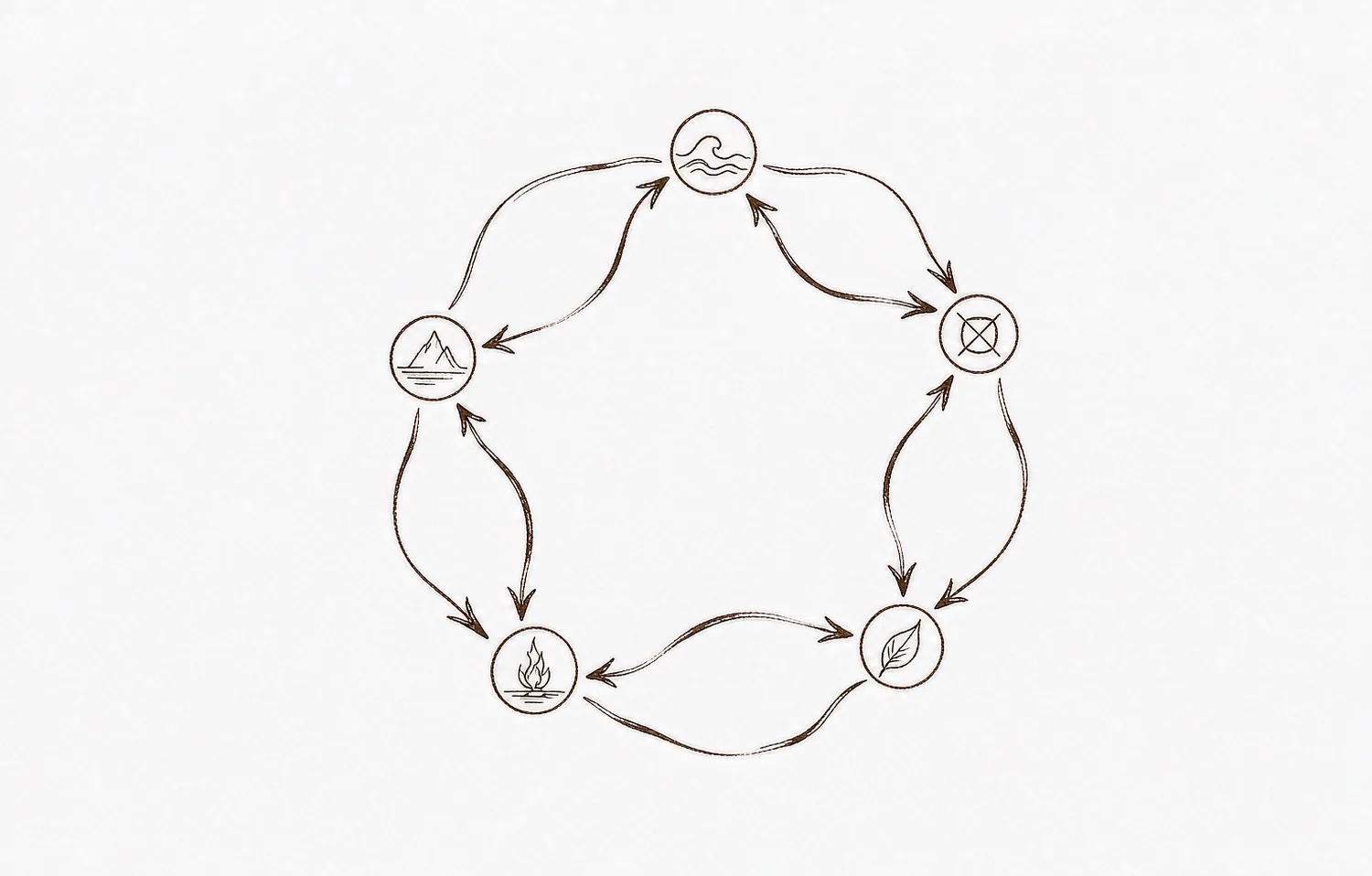
The Nobleman Star (天乙贵人, tian yi gui ren) is the auxiliary star that classical texts treat most favourably. It is read as the presence of help: mentors, sponsors, timely intervention by people with more power than the person asking.
It is also described with a caution that is easy to miss: the star indicates that help exists, not that the person knows how to accept it.
How it is found
| Star | Looked up from | The lookup | What it does to a chart |
|---|---|---|---|
| 天乙贵人 Nobleman | day or year stem | 甲戊庚→丑未 · 乙己→子申 · 丙丁→亥酉 · 壬癸→卯巳 · 辛→午寅 | Help arriving from outside your own effort. Not a promise of support — a description of how support tends to arrive when it does. |
| 桃花 Peach Blossom | trine group of the year or day branch | 申子辰→酉 · 寅午戌→卯 · 巳酉丑→午 · 亥卯未→子 | Being noticed. Placement decides the topic — it lands in a marriage palace, a career palace or an entertainment-shaped chart equally readily. |
| 驿马 Travelling Horse | trine group of the year or day branch | 申子辰→寅 · 寅午戌→申 · 巳酉丑→亥 · 亥卯未→巳 | Mobility. The most literal of the four, and the one with a plain behavioural counterpart. |
| 羊刃 Yang Blade | day stem (only some stems carry one) | 甲→卯 · 乙→辰 · 丙戊→午 · 丁己→未 · 庚→酉 · 辛→戌 · 壬→子 · 癸→丑 | Intensity of will. Some lineages give a different branch for the yin stems and for 庚 — which is exactly the kind of disputed entry worth treating as the weakest thing in a reading. |
The Nobleman is located from the day stem (in some schools the year stem) using a fixed table. Jia and Wu give Chou and Wei; Yi and Ji give Zi and Shen; Bing and Ding give Hai and You; Geng and Xin give Wu and Yin; Ren and Gui give Si and Mao.
If either designated branch appears in the chart — most often in the year, month or day branch — the star is present in that palace, and the palace determines the area of life where the help tends to arrive.
What it is read as
The classical reading is protection and rescue: a person who is helped at moments when the situation could have gone badly, often by someone more senior or more powerful who had no obligation to intervene.
In practice the star is read alongside the ten gods rather than instead of them. A chart with a strong Officer and a Nobleman is read as authority that protects rather than constrains. The same Officer without the star is read as plain structure and pressure.
Where it sits
In the year branch it describes family and inherited connections — support that comes from the circumstances of birth. In the month branch it is read as professional help: mentors, referrals, being backed by someone senior at a useful moment.
In the day branch the reading concerns the spouse and close partnership — the help that arrives from the person closest to you. In the hour branch it concerns late-life support and, in some readings, being looked after by those you raised.
The honest reading
The star is popular precisely because it sounds unambiguously good, and that is the reason to handle it carefully. It does not promise that help will be offered; it indicates that help is available in the chart's structure.
Classical texts also note that the Nobleman is passive — it does not create the rescue, it responds to a situation. Charts with the star and a strong Companion or Rob Wealth are often read as people whose own assertiveness is the mechanism by which the support actually gets activated.
Common questions
See your four pillars
The calculator is free and lives on the reports page: enter your birth date, time and time zone and it builds the full chart. The written readings below it are optional — one payment each, yours to keep.
See the reports