The Siblings Palace (兄弟宫)
Peers, equals and the people beside you.
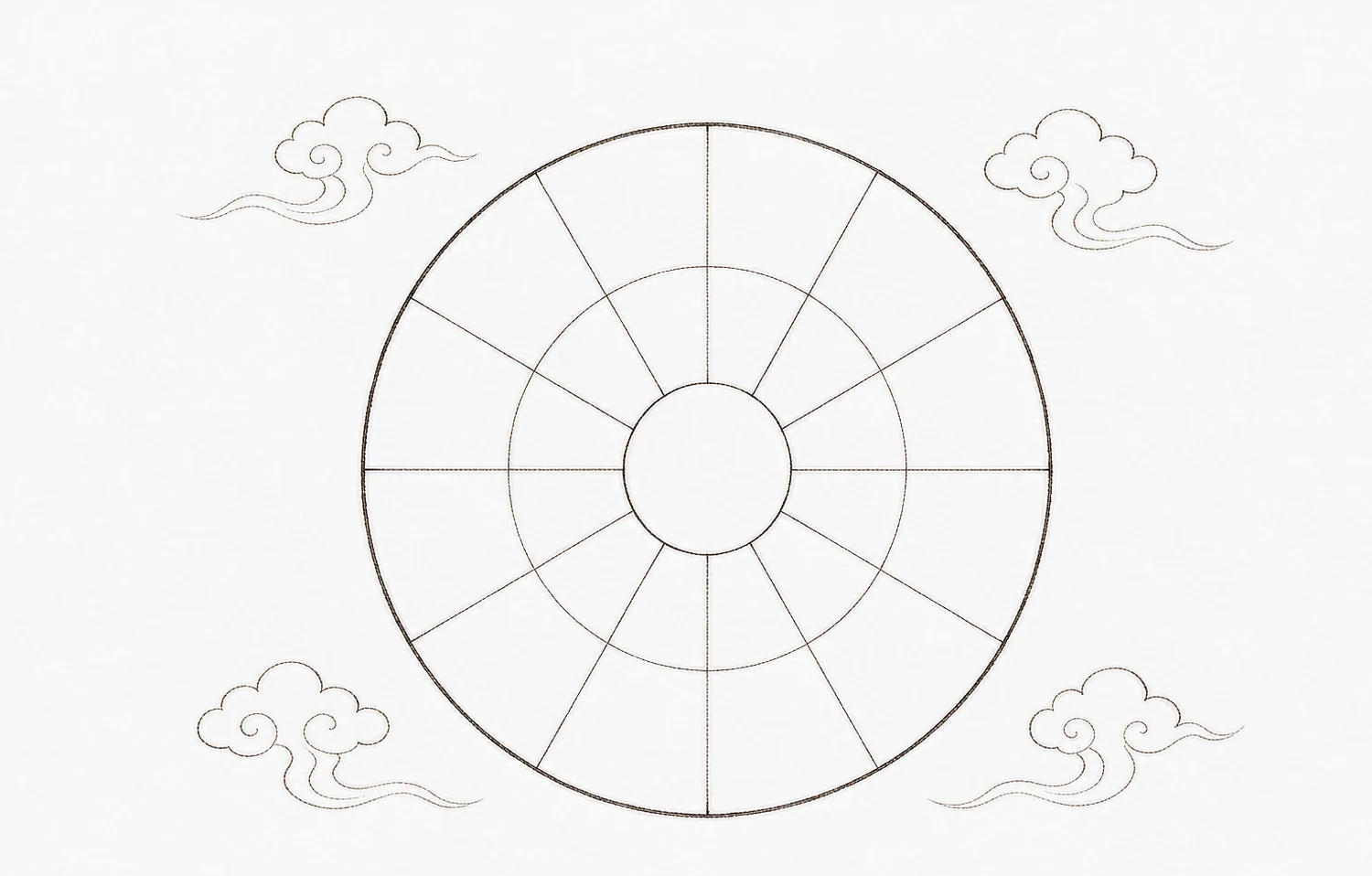
The Siblings Palace (兄弟宫) governs brothers and sisters in the classical texts, but its modern range is wider: siblings, close peers, and the horizontal band of relationships — the people who are neither above you nor below you.
What the 兄弟宫 governs
The fourteen stars in the Siblings Palace
Whichever major star lands in this palace becomes the protagonist of this area of your life. The readings below describe each star's signature here — brightness and neighbouring stars then set the tone.
| Star | In the Siblings Palace |
|---|---|
| Zi Wei 紫微 | A sense of rank among equals — you are either the one who organises the siblings or the one who is kept at a distance by them. Mutual help is real but formal. |
| Tian Ji 天机 | Bright, competitive siblings and a relationship that functions more like an exchange of ideas than a family bond. Mutual help usually comes in the form of good advice. |
| Tai Yang 太阳 | Warm relations with brothers and peers and a tendency to be the one who carries more than their share of family obligation. Support runs strongly in one direction. |
| Wu Qu 武曲 | Relations with siblings are practical rather than expressive, and financial matters between you need to be written down. Disagreements over money or duty are common here. |
| Tian Tong 天同 | Warm, supportive relations with siblings and peers, and a family structure in which you are looked after more often than you look after others. |
| Lian Zhen 廉贞 | Competitive and occasionally fraught relations with siblings. There is usually a history of one comparison or another running through the family. |
| Tian Fu 天府 | Dependable relations and a family role as the responsible one. You are usually the sibling others come to, which is a position as much as a relationship. |
| Tai Yin 太阴 | Gentle relations with siblings, and a tendency for the more emotionally capable sibling — usually you — to be the family's informal confidant. |
| Tan Lang 贪狼 | Warm, competitive relations with siblings and a busy social household. The comparison between siblings tends to be prominent rather than hidden. |
| Ju Men 巨门 | Relations with siblings run through words — arguments, comparisons, and long-standing quarrels that are occasionally about nothing else. Distance is common and not necessarily hostile. |
| Tian Xiang 天相 | Good relations with siblings and a family role as the one who mediates. Peacekeeping is comfortable and can hide a reluctance to state your own position. |
| Tian Liang 天梁 | The elder position among peers, whether or not you are the oldest. You are the one consulted, and the one who ends up handling family difficulties. |
| Qi Sha 七杀 | Competitive relations with siblings and a family culture of comparison or struggle. Distance is common, and it is usually distance with respect rather than estrangement. |
| Po Jun 破军 | Relations with siblings are distant or interrupted, often by distance in geography rather than by conflict. You are usually the one who left. |
How practitioners read the 兄弟宫
Classical readers took this palace literally — how many siblings you have. Modern readers, in one-child households, read it as peer style: how you negotiate with equals when there is no hierarchy to lean on.
A bright supportive star here reads as lifelong allies; a destructive star reads as peers who cost more than they give — the lesson is selectivity, not isolation.
This palace also indirectly mirrors your mother in some schools, which makes it worth reading beside the Parents Palace rather than instead of it.