Indirect Wealth (偏财) in BaZi — Meaning, Pillars and Balance
What Indirect Wealth (偏财) means in BaZi: the relationship it describes, how it reads in each of the four pillars, and its strengths and costs.
What is Indirect Wealth (偏财) in BaZi?
Indirect Wealth (偏财) is one of the ten gods of BaZi. Indirect Wealth is the same element as Direct Wealth with the polarity flipped — and that single difference changes everything. It is money that comes through people, timing and opportunity rather than through the predictable exchange of work for pay.
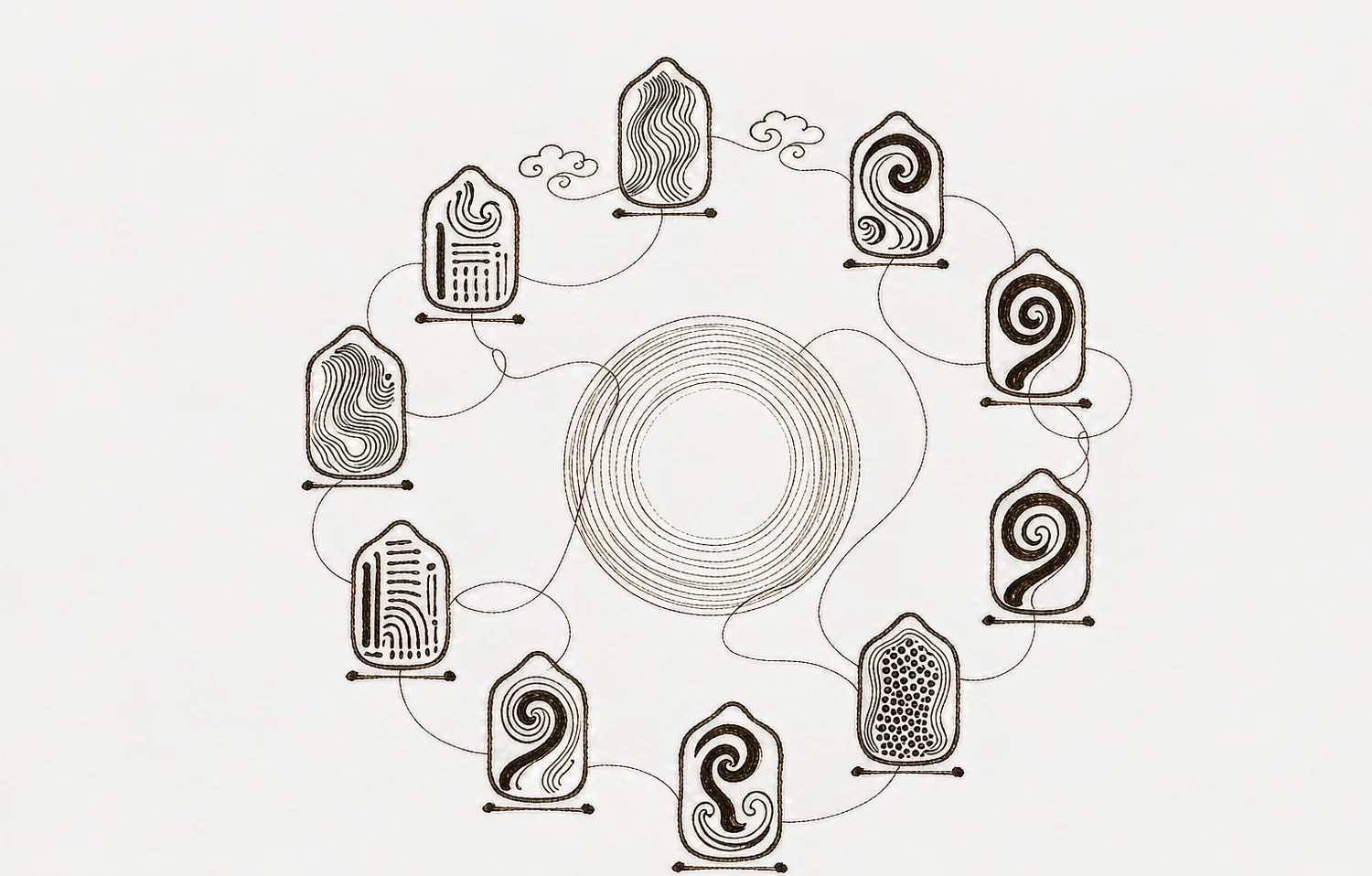
What Indirect Wealth means
偏财 is read as the god of flow rather than the god of holding. Where Direct Wealth accumulates, Indirect Wealth circulates: commissions, partnership stakes, deals made on a handshake, income that varies sharply by quarter. Charts with strong Indirect Wealth tend to describe people who are comfortable with that variability and genuinely uncomfortable with a fixed salary.
The classical association with the father and with social capital is not arbitrary. Indirect Wealth is wealth that belongs partly to other people, so the mechanism that produces it is relationship: knowing who has what, who needs what, and being trusted enough to stand between them. This is why the god shows up so often in charts of people who work through networks — sales, brokerage, partnerships, dealmaking.
Its characteristic weakness is equally structural. Money that arrives easily tends to leave the same way. Charts heavy with Indirect Wealth usually need something else — a Direct Wealth channel, a strong Seal, or an earth element to hold the results — or the pattern becomes feast and famine rather than growth.
From the inside
From the inside, Indirect Wealth feels like always having one more possible arrangement in mind. You meet someone and part of your brain is already asking what this could become — not cynically, but automatically. The upside is that opportunities find you; the cost is that your attention is permanently spread across a few open options that have not resolved. There is also a specific discomfort with being locked in: a fixed salary, a single client, a plan that cannot be renegotiated feels less like security and more like a cage.
Indirect Wealth in each pillar
| Position | How it reads |
|---|---|
| Year pillar | A family culture of opportunity and risk, sometimes an inheritance or a business in the family line. Charts like this often start earning early. |
| Month pillar | The strongest position. Income through people, deals and variable arrangements sits at the centre of the career rather than at its edges. |
| Day pillar | Indirect Wealth in the day branch is associated with a charismatic, sociable partner — and with a household whose finances are active rather than settled. |
| Hour pillar | Late-life opportunity: investments, second acts, income that appears after the main career. Charts like this often have an unusually good final quarter. |
Where Indirect Wealth works for you
- Opportunity radar. You notice the deal in the room before anyone has named it. This is a specific, marketable capacity.
- Social capital. People introduce you to other people, which is the single most reliable engine of opportunity there is.
- Comfort with uncertainty. You can operate without knowing the month's income in advance. Most people cannot, and that is the whole advantage.
- Generosity that returns. You spend on relationships without keeping score, and the returns arrive through channels you did not plan.
Where it costs you
- Leakage. Money that comes in easily goes out easily. Without a structure to hold it, the pattern is a treadmill rather than a curve.
- Overcounting open options. You can plan around opportunities that have not closed. The gap between expected and realised income is your standard financial hazard.
- Spreading too thin. Three half-built ventures beat one finished business in your head and lose to it in reality.
- Risk-blindness in good years. A strong streak reads as capability rather than as variance, and the next lean stretch is not provisioned for.
Questions about Indirect Wealth
The other gods
See your four pillars
The calculator is free and lives on the reports page: enter your birth date, time and time zone and it builds the full chart. The written readings below it are optional — one payment each, yours to keep.
See the reports